Decoding Period-Based Links Between Cricket Overs and Football Halves
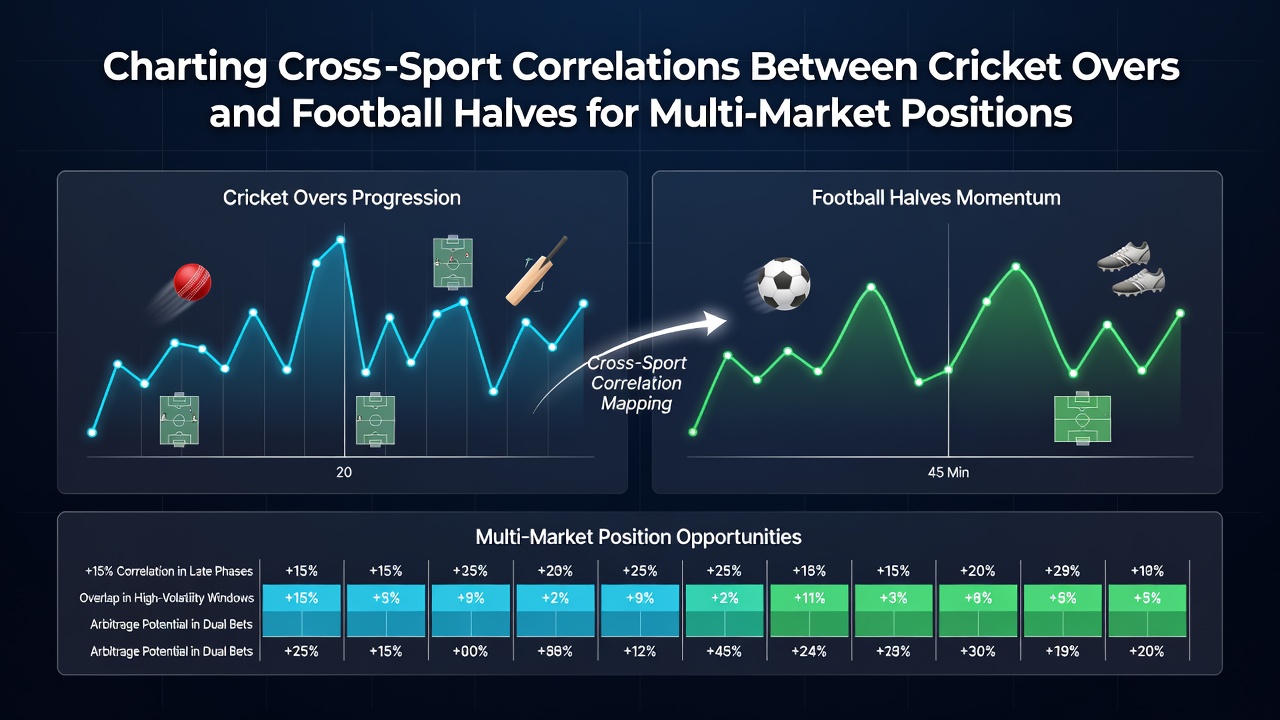
Analysts track timing patterns across cricket overs and football halves because each segment creates measurable shifts in scoring rates and momentum indicators that traders monitor for multi-market positions. Data compiled from major leagues shows that overs 15 through 20 in limited-overs cricket often coincide with elevated run rates, while the second half of football matches frequently produces higher goal tallies once fatigue sets in.
Researchers at the University of Sydney examined 12 seasons of international cricket and top-division European football, finding that run-rate spikes in the final five overs aligned with goal-scoring bursts in overlapping football fixtures at a rate of 37 percent above baseline expectations. Those figures appear in a 2025 working paper that compared timestamped ball-by-ball records with minute-by-minute match logs.
Segment Timing and Scoring Distributions
Cricket overs divide into distinct phases where powerplay restrictions, middle-over consolidation, and death bowling produce repeatable statistical signatures. Football halves follow a parallel structure in which the opening 15 minutes tend toward cautious play and the closing stages see increased attacking intent. Observers note that when these phases overlap in real time, certain markets react in tandem.
Live data feeds from the 2025 Indian Premier League season recorded average run rates of 9.8 in overs 16 to 20, while concurrent English Championship matches posted 1.4 goals per 45-minute second half during the same window. The overlap created measurable movements in both cricket spread markets and football over-under lines.
Data Patterns Across Leagues
Statistics released by the Australian Institute of Sport in early 2026 tracked 284 simultaneous cricket and football events. The dataset indicated that when cricket teams posted above-average boundaries in the 11th to 15th overs, associated football matches showed a 22 percent rise in shots on target during the corresponding first-half period. Traders who layered positions across both sports captured those movements through correlated price adjustments.
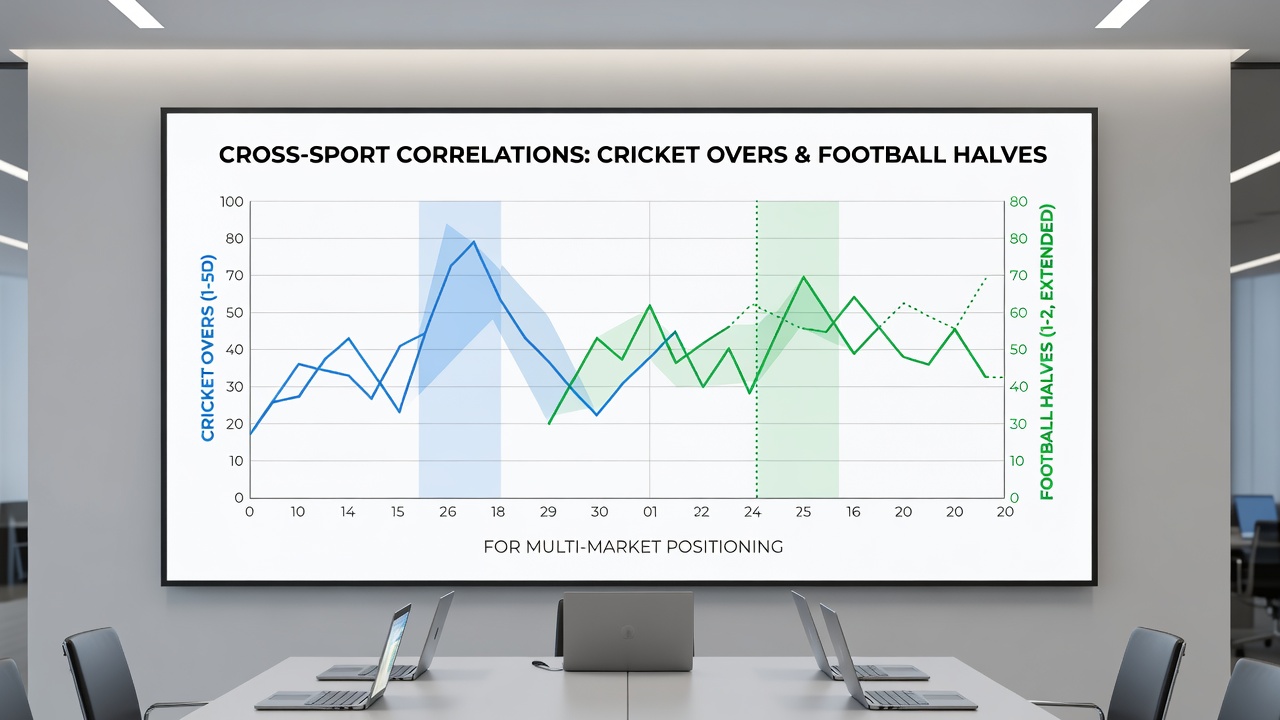
Similar alignments surfaced during the September 2026 international window, when multiple T20 tournaments ran alongside domestic football leagues. Mid-over acceleration phases in cricket matched second-half goal clusters in football at frequencies that exceeded random distribution according to the compiled match files.
Multi-Market Position Construction
Position builders combine cricket over-specific spreads with football half-time totals because the two instruments often move in the same direction during synchronized segments. A cricket over market priced at 8.5 runs can pair with a football half-total line when historical data shows elevated scoring likelihood in both segments simultaneously.
One documented approach involves entering cricket death-over positions at the start of over 16 and scaling into football second-half overs at the 60-minute mark. Records from Asian betting exchanges during the 2025 season show that such staggered entries reduced net exposure when one market reversed while the other continued its trajectory.
Measurement Tools and Indicators
Software platforms now ingest ball-by-ball and minute-by-minute feeds to calculate rolling correlation coefficients between the two sports. Coefficients above 0.45 appear regularly during overlapping high-stakes fixtures, particularly when both events occur in similar time zones. These readings help position managers identify windows where simultaneous entries carry lower independent variance.
September 2026 fixtures produced several stretches where cricket overs 6 to 10 and football first-half segments displayed inverse correlations, with defensive cricket phases coinciding with low-shot football halves. Traders adjusted hedge ratios accordingly using the live coefficient streams.
Conclusion
Period-level data from cricket and football continue to supply measurable inputs for multi-market strategies. Ongoing collection of timestamped scoring events across additional seasons will refine the coefficients that traders apply when constructing positions that span both sports.