
Climatic Variables and Their Influence on Outdoor Grand Slam Tennis Betting Markets
Weather patterns shape how tennis unfolds on outdoor courts, and betting markets adjust accordingly when conditions shift ball trajectories, player endurance, and point durations. Data from multiple Grand Slams shows that temperature swings above 30 degrees Celsius slow ball speeds while increasing fatigue rates among competitors, prompting oddsmakers to recalibrate pre-match lines. Humidity levels above 70 percent add weight to the ball, reducing bounce height and altering rally lengths in measurable ways that live bettors track through real-time statistics.
Temperature Effects on Player Performance and Market Adjustments
High temperatures at events like the Australian Open force players to manage hydration and recovery between sets, and bookmakers incorporate historical performance metrics under similar conditions when setting opening odds. Researchers at sports science institutions have documented that core body temperatures rising beyond 38.5 degrees Celsius correlate with a 12 to 15 percent drop in serve accuracy for many professionals. These shifts appear in live markets as point-by-point data streams update, allowing bettors to respond when one player begins double-faulting more frequently in the third set.
Wind speeds exceeding 25 kilometers per hour introduce another variable, particularly on grass surfaces at Wimbledon where gusts push balls off intended lines and shorten rallies. Observers note that markets for total games or set winners move quickly once meteorological reports confirm sustained breezes, because return percentages decline and service games become more volatile. One study tracking matches from 2018 through 2024 found that windy conditions increased break-point conversion rates by roughly 8 percent on average across multiple surfaces.
Humidity, Precipitation, and Their Role in Live Odds Movement
Moisture in the air affects clay courts at the French Open more than hard courts at the US Open, because the ball picks up additional weight and slides less predictably on damp surfaces. Figures from tournament organizers reveal that matches played when relative humidity exceeds 80 percent last an average of 22 minutes longer per set compared with drier days. Betting platforms respond by widening spreads on over/under totals once forecasts indicate incoming rain or elevated moisture, since extended rallies favor players with superior baseline consistency.
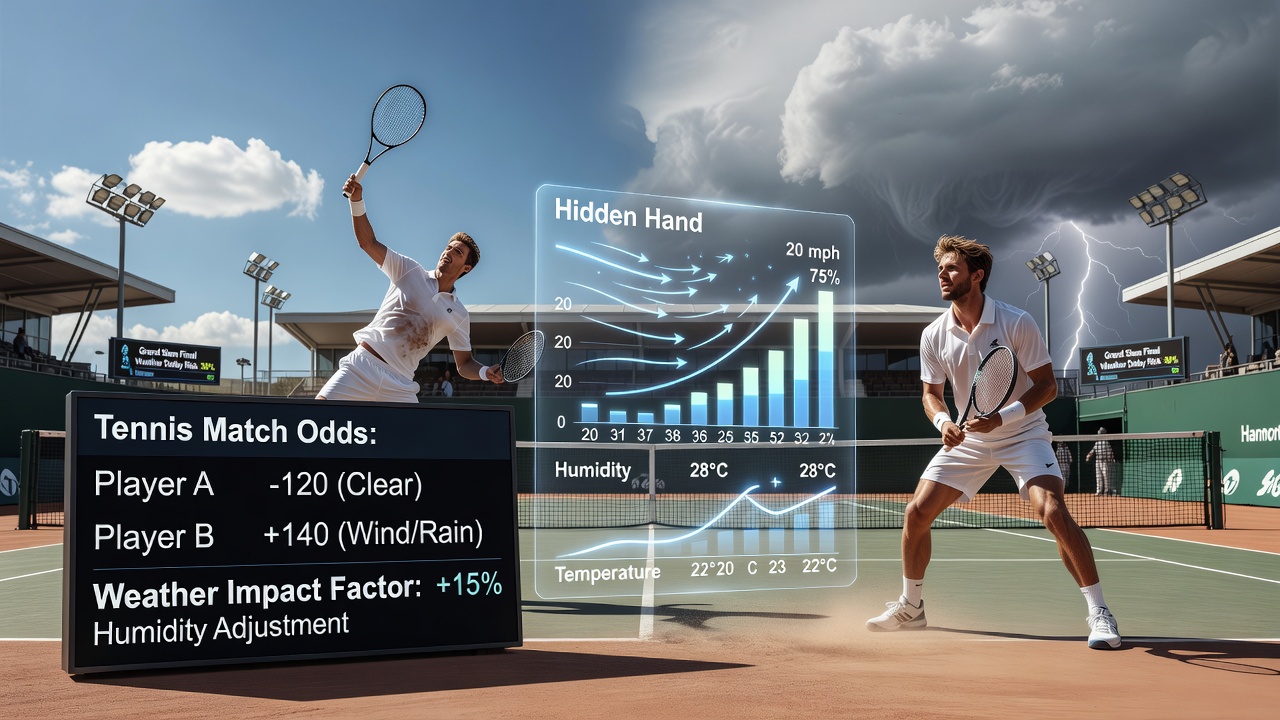
Rain delays create separate market dynamics because suspended matches resume under potentially different atmospheric conditions. Data compiled by the International Tennis Federation indicates that players returning after a 90-minute rain interruption show measurable declines in first-serve percentages during the first three games. Oddsmakers therefore monitor radar updates closely and adjust in-play lines to reflect both the physical interruption and the statistical patterns that follow restarts.
Regional Climate Patterns Across Major Tournaments
Each outdoor Grand Slam sits in a distinct climate zone that produces recurring weather signatures. The Australian Open contends with extreme heat and occasional bushfire smoke, while Wimbledon contends with Atlantic fronts that bring sudden showers. The US Open experiences late-summer humidity spikes and occasional thunderstorms that halt play for hours. These patterns generate predictable adjustments in pre-tournament futures markets, where bettors weigh historical results from comparable weather years against current rosters.
October 2026 data releases from meteorological agencies in both hemispheres continue to refine forecasting models used by sports analytics firms. Improved accuracy in predicting wind gusts and temperature drops during evening sessions has allowed sharper live betting lines, particularly during night matches at the US Open where dew points rise rapidly after sunset. Industry reports from organizations such as the National Oceanic and Atmospheric Administration document how micro-climate variations within stadiums can differ by several degrees from surrounding areas, influencing player comfort and shot selection.
Statistical Correlations Between Conditions and Match Outcomes
Analyses published in the Journal of Sports Sciences link specific weather thresholds to changes in ace percentages and unforced error rates. When temperatures fall below 18 degrees Celsius, serve speeds drop by an average of 4 kilometers per hour according to radar measurements taken during professional matches. These mechanical differences translate directly into altered probabilities that betting exchanges reflect within minutes of updated forecasts.
Wind direction relative to the court orientation also matters. Crosswinds that move from one baseline to the other disrupt timing more than headwinds or tailwinds, and data sets from multiple seasons show higher variance in game totals under such conditions. Markets price this variance through wider ranges on handicap bets until the wind pattern stabilizes.
Conclusion
Weather data integration into tennis betting models has grown more sophisticated as real-time sensors and forecast updates become widely available. Grand Slam tournaments continue to supply the clearest examples because their outdoor formats expose every match to atmospheric variables that indoor events largely eliminate. Market movements tied to temperature, humidity, wind, and precipitation follow consistent statistical patterns that researchers and analysts track across seasons, providing measurable edges when those patterns repeat under similar conditions.